Leave Your Message
Choosing the right Steel Wire Rod in 2026 requires more than comparing prices on a supplier’s quotation. Global buyers must examine chemistry, diameter tolerance, surface condition, coil weight, mechanical performance, and delivery reliability. A bright coil may still carry scale, inconsistent carbon content, or processing risks beneath the surface. Small differences can affect drawing breaks, galvanizing quality, welding performance, and final production costs.
Edwin Basson, Director General of worldsteel, has described steel as “a material for the future.” That view matters here. Steel Wire Rod supports construction fasteners, tire cord, welding wire, mesh, springs, and automotive components. This guide will compare low-carbon, medium-carbon, high-carbon, alloy, stainless, and high-strength grades for international purchasing decisions. It will also examine SAE, ASTM, EN, JIS, and buyer-specific specifications. Standards help. They do not remove every risk.
The best grade depends on the next manufacturing step. Low-carbon rod suits cold heading and general wire drawing. High-carbon rod offers stronger performance for springs, ropes, and tire reinforcement. Stainless rod helps resist corrosion, but its higher cost needs a clear service reason. Buyers should request mill test certificates, heat numbers, inspection records, and representative samples. Supplier audits can reveal packaging damage, weak traceability, or delayed shipment patterns.
There is no universal winner.
This outline has a limitation. Market prices, freight conditions, energy costs, and regional quality practices can change quickly. A grade that performs well in one plant may fail after a different annealing or drawing process. Practical trials remain essential. The strongest purchasing decision combines laboratory data, production experience, and a realistic review of total landed cost.
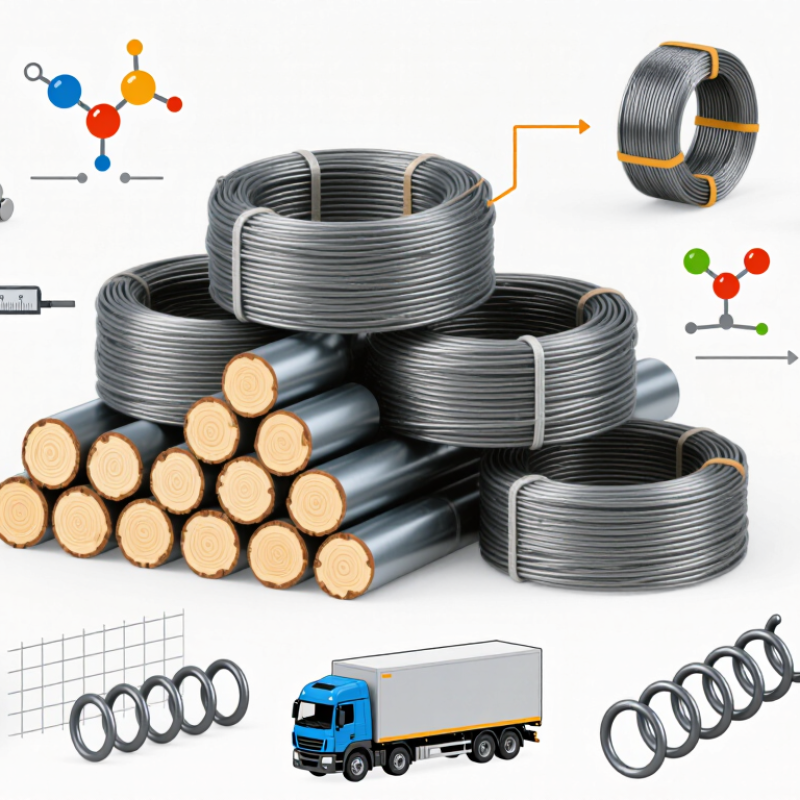
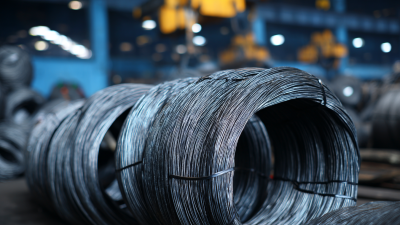
For global buyers in 2026, steel wire rod commonly arrives in diameters from 5.5 to 16 mm. The smaller 5.5–8 mm sizes suit cold heading, mesh, and fine wire drawing. Larger 10–16 mm sizes support heavier drawing, welding products, and mechanical components. ISO 16120-1 identifies wire rod as a hot-rolled, coiled semi-finished product, but exact dimensional tolerances depend on the agreed standard and mill route.
Coil form matters as much as diameter. Most shipments use compact, continuous coils weighing several tonnes, allowing automated payoff lines to reduce handling. Buyers should confirm outside diameter, inside diameter, coil mass, tie locations, and weld-free length before contracting. The World Steel Association reported about 1.89 billion tonnes of crude steel production in 2023, showing the scale behind this supply chain. However, crude steel volume does not prove wire rod availability. That distinction is easy to miss.
A practical inspection should check surface laps, rust, scale, ovality, and heat-number traceability. EN 10016 and ISO 16120 provide useful references, yet they do not replace purchase specifications. I would request mill certificates, tensile data, chemical analysis, and dimensional records for each heat. A small but costly mistake. Some buyers also overlook coil inner diameter, causing payoff equipment problems at the receiving plant. The 5.5–16 mm range is a strong starting point, not a universal rule. Alloy grade, drawing reduction, transport distance, and end-use requirements still decide the suitable rod.
| Steel Wire Rod Type | Typical Chemical or Grade Description | Common Diameter Range | Typical Coil Form | Surface and Delivery Condition | Common Downstream Applications | Buyer Checks and Reference Standards |
|---|---|---|---|---|---|---|
| Low-Carbon Steel Wire Rod | Generally low-carbon steel, often selected for good ductility and cold-forming performance. Exact carbon limits depend on the specified grade. | 5.5–16 mm | Hot-rolled round coils; coil mass, inner diameter, and outer diameter are mill-specific. | Usually hot-rolled, with an oxide scale layer; supplied in as-rolled condition or prepared for drawing. | General-purpose wire, nails, mesh, fencing, cold-heading products, and basic formed parts. | Check chemical limits, tensile properties, decarburization, surface defects, coil traceability, and dimensional tolerance. EN 10016 and ASTM A510/A510M are commonly used reference frameworks. |
| Cold-Heading Quality Wire Rod | Low-carbon or medium-low-carbon steel designed for heading, upsetting, and fastener production; grade chemistry is application-specific. | 5.5–16 mm | Uniform hot-rolled coils suitable for descaling, spheroidizing, drawing, and heading preparation. | Requires controlled surface quality and limited harmful seams, laps, and internal discontinuities. | Bolts, screws, rivets, nuts, and other cold-formed fasteners. | Review spheroidize-annealing response, surface quality, internal soundness, inclusion level, and heading performance. Confirm the exact fastener or wire standard before ordering. |
| Medium- and High-Carbon Steel Wire Rod | Carbon content is commonly higher than low-carbon grades; many commercial specifications use approximately 0.25–0.60% carbon for medium-carbon and above approximately 0.60% for high-carbon grades, subject to the governing standard. | 5.5–16 mm | Hot-rolled coils for subsequent patenting, drawing, heat treatment, or direct forming. | Hot-rolled scale is normal; tight control of segregation, decarburization, and surface discontinuities is important. | High-strength wire, tire cord, steel cord, wire rope, prestressed concrete wire, and industrial springs. | Check carbon, manganese, silicon, phosphorus, sulfur, inclusion rating, tensile behavior, and full-depth decarburization. Higher carbon usually increases strength potential but reduces forming ductility. |
| Spring Steel Wire Rod | Medium- or high-carbon grades, sometimes alloyed with silicon, manganese, chromium, or other elements to improve elastic and fatigue performance. | 5.5–16 mm | Hot-rolled coils with controlled dimensional consistency and surface condition. | May be supplied for oil tempering, drawing, or additional heat treatment; scale removal and surface inspection are normally required. | Automotive suspension springs, mechanical springs, agricultural springs, and formed elastic components. | Verify hardenability, fatigue requirements, decarburization depth, inclusion control, straightness after processing, and the applicable spring-wire specification. |
| Welding Wire Rod | Low-carbon or low-alloy chemistry formulated for consistent welding-wire drawing and controlled weld-metal composition. | 5.5–16 mm before drawing; final welding wire is normally much smaller. | Clean hot-rolled coils designed for pickling, mechanical descaling, drawing, and surface treatment. | Low surface scale, stable chemistry, and controlled copper or residual-element levels are important for drawing and welding performance. | Solid welding wire, flux-cored wire feedstock, gas-shielded welding consumables, and submerged-arc welding products. | Check weld-metal chemistry, surface cleanliness, drawability, residual elements, hydrogen-related controls, and the required welding-consumable classification. |
| Free-Cutting Steel Wire Rod | Resulfurized or otherwise modified steel designed to improve machinability; sulfur, lead, or other additions may be permitted only when specified. | 5.5–16 mm | Hot-rolled coils or bars depending on the subsequent machining route; coil availability varies by specification. | Generally supplied hot-rolled, with requirements for surface quality and machinability consistency. | Automatic-lathe parts, threaded components, shafts, fittings, and high-volume machined parts. | Confirm sulfur and lead restrictions, inclusion morphology, machinability target, dimensional tolerance, environmental requirements, and restrictions on welding or cold forming. |
| Micro-Alloyed Steel Wire Rod | Low-carbon or medium-carbon steel containing small controlled additions such as niobium, vanadium, or titanium to improve strength and grain control. | 5.5–16 mm | Controlled-cooled hot-rolled coils, with processing designed to achieve consistent mechanical properties. | Surface condition, cooling history, and grain structure are important to final strength and formability. | High-strength wire, reinforcement products, fasteners, automotive components, and structural wire applications. | Review microalloy content, rolling and cooling parameters, yield and tensile strength, elongation, weldability, and forming requirements. |
| Stainless Steel Wire Rod | Austenitic, ferritic, martensitic, or precipitation-hardening stainless steel; chromium content is typically at least 10.5% for stainless classification, with grade-specific alloying. | 5.5–16 mm, depending on grade and mill capability. | Hot-rolled coils, often supplied for pickling, annealing, peeling, or cold drawing. | May be supplied descaled and pickled or in a heat-treated condition; surface finish must be clearly specified. | Corrosion-resistant wire, fasteners, springs, medical and food-processing components, mesh, and industrial wire products. | Check chromium, nickel, molybdenum, carbon, nitrogen, corrosion resistance, magnetic behavior, heat treatment, and the applicable stainless-steel product standard. |
| Low-Alloy Steel Wire Rod | Carbon steel with controlled additions of elements such as chromium, nickel, molybdenum, or boron to improve strength, hardenability, or service performance. | 5.5–16 mm | Hot-rolled coils with controlled cooling or subsequent heat-treatment capability. | Usually hot-rolled; surface and internal quality requirements depend strongly on the final component. | Automotive parts, high-strength fasteners, wire rope, springs, gears, and engineering components. | Confirm hardenability, alloy chemistry, heat-treatment route, tensile properties, impact requirements, grain size, and weldability. |
| Important purchasing note: Diameter ranges, coil weight, coil dimensions, tolerance, surface condition, packaging, and applicable standards are not universal. Buyers should specify the steel grade, chemical limits, mechanical properties, test requirements, delivery condition, coil dimensions, corrosion protection, and inspection documents in the purchase contract. | ||||||