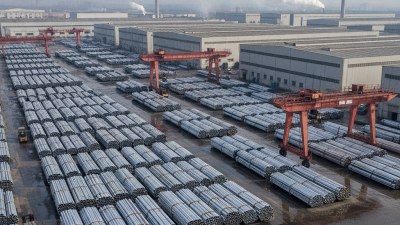
Choosing the right Pp Corrugated Steel Sheet is rarely a simple price comparison. Global buyers must examine profile shape, core structure, coating quality, thickness, and production consistency. A sheet that performs well in a dry warehouse may fail near saltwater. Small differences matter.
Dr. Michael F. Ashby, a respected materials-selection expert, stated, “The best material is not necessarily the strongest one.” This principle guides the 2026 market. Buyers should match each sheet type with its actual use, including roofing, temporary walls, partitions, packaging protection, and industrial covers. Galvanized surfaces may suit general construction. Pre-painted options can improve appearance and weather resistance. Lightweight PP-faced designs may reduce handling effort, but they require careful evaluation under heat, impact, and repeated movement.
Performance must be verified, not assumed. Request thickness reports, coating details, dimensional tolerances, test records, and batch traceability. Check whether the supplier controls warping, edge damage, color variation, and surface bonding. These details often reveal manufacturing discipline. International projects also need clear packaging, moisture protection, labeling, and delivery planning.
No single type wins everywhere. That is easy to forget. Some buyers focus too heavily on initial cost and overlook replacement risk. Others select premium coatings without confirming real exposure conditions. This guide compares the 2026 Best PP Corrugated Steel Sheet Types for Global Buyers. It also questions common purchasing habits, because specifications can look impressive while practical performance remains uncertain.
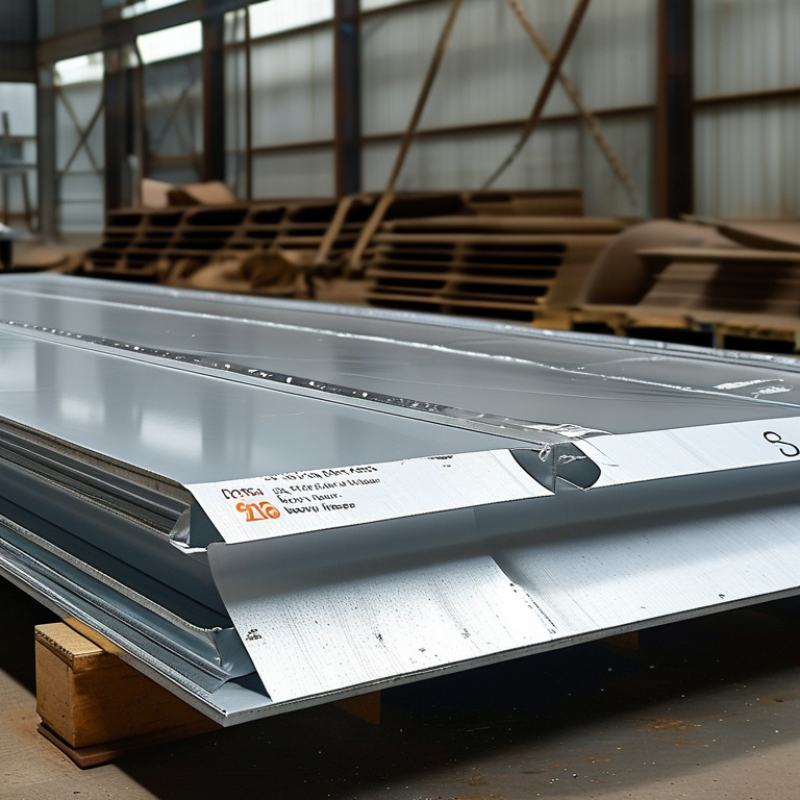
PP corrugated steel sheet combines a profiled steel core with a polypropylene (PP) coating or laminated surface. The steel supplies rigidity, while PP helps resist moisture, stains, and selected chemicals. In practice, construction varies. Some products use galvanized steel beneath the PP layer; others add primers and protective films.
Its corrugations increase bending strength without adding much weight. This supports roofing, wall cladding, partitions, and temporary enclosures. The World Steel Association reported global crude steel production of about 1.88 billion tonnes in 2024, showing the scale of steel supply behind this product category. Plastics Europe’s 2024 market data also identified polypropylene as one of Europe’s major polymer groups, at roughly one-tenth of plastics demand.
However, PP is not fireproof. Thermal expansion can also loosen poorly fixed panels. That detail is sometimes ignored.
Tips:
Ask for coating thickness, steel grade, zinc mass, impact data, and fire classification. Check whether the PP layer is bonded or merely laminated. Inspect cut edges and fastener holes before installation. Do not judge durability from color alone. Salt spray results can help, but they do not perfectly predict every coastal site. A product may pass a laboratory test and still fail after careless cutting, trapped water, or incompatible screws. Test a sample under local heat and humidity before placing a large order.

PP corrugated steel sheets usually combine a steel substrate with a polypropylene protective layer. The substrate strongly affects service life. Galvanized steel suits general roofing and wall cladding. Aluminum-zinc coated steel performs better in humid or coastal environments. Stainless steel offers higher corrosion resistance, but its cost can limit large projects. Buyers should confirm whether “PP” means polypropylene coating or a supplier’s internal product abbreviation.
Profile shape creates another important category. Wave profiles provide a traditional appearance and moderate drainage capacity. Trapezoidal profiles offer stronger load distribution for warehouses and industrial roofs. Box profiles provide a cleaner facade and useful stiffness. Sheet thickness, rib height, and support spacing must match local wind and snow conditions. A thin sheet may look economical, yet it can vibrate under strong wind.
Surface color and coating structure also vary. Smooth finishes are easier to clean, while textured surfaces can hide minor scratches. UV stability matters in regions with intense sunlight. Polypropylene may resist moisture well, but heat limits and long-term color retention require careful checking. Request test data for coating adhesion, salt spray performance, impact resistance, and thermal exposure. Do not rely on appearance alone. We have seen visually strong sheets fail early when cut edges were left unprotected. Specifications can still be incomplete, especially across different export markets.
For global buyers, comparing PP corrugated steel sheets starts with strength, not appearance. Check the base steel thickness, yield strength, profile depth, and effective span. A deeper corrugation can improve stiffness, but it may complicate overlapping and cutting. A thicker sheet is not automatically better. Local wind, snow, seismic conditions, and roof spacing still control the required specification. Ask for test reports, mill certificates, and measured thickness data rather than relying on catalog claims.
Coating quality affects both installation and service life. Confirm the PP coating thickness, UV resistance, color stability, and adhesion after forming. Inspect cut edges and punched holes carefully; exposed steel can become an early corrosion point. In coastal or industrial areas, request testing suited to salt and chemical exposure. A glossy surface may look impressive, yet appearance alone proves little. I have seen projects select attractive sheets without checking edge protection.
Size comparisons should include effective cover width, usable length, tolerance, overlap, and packing limits. Long panels reduce joints but can suffer transport damage or difficult handling. Measure the roof structure before ordering. Service life depends on coating, drainage, ventilation, fastener compatibility, and maintenance frequency. Review warranty terms, but do not treat them as a guaranteed lifespan. A realistic comparison includes sample inspection, installation guidance, replacement availability, and technical support across borders. Some specifications remain uncertain until the sheet is tested in the actual climate.
| PP Corrugated Sheet Type | Typical Structure | Nominal Thickness | Typical Basis Weight | Strength and Load Characteristics | Coating or Additive | Common Sheet Sizes | Indicative Outdoor Service Life | Best-Fit Application |
|---|---|---|---|---|---|---|---|---|
| Standard Twin-Wall PP Sheet | Two flat skins connected by parallel ribs | 2–5 mm | 250–900 g/m² | Good stiffness-to-weight ratio; suitable for light separators and temporary covers. Tensile strength commonly falls within approximately 20–35 MPa for PP sheet grades. | Usually uncoated; may include basic color pigment | 1220 × 2440 mm; 1500 × 3000 mm; custom cut sizes | About 6–18 months | Indoor steel-sheet separation, packaging, temporary floor and surface protection |
| UV-Stabilized Twin-Wall PP Sheet | Twin-wall or multi-wall fluted core with UV protection | 3–10 mm | 450–1800 g/m² | Higher bending stiffness than thin standard grades; better resistance to cracking and embrittlement during outdoor exposure. | UV absorber and/or hindered amine light stabilizer incorporated into the polymer | 1220 × 2440 mm; 1500 × 3000 mm; rolls or custom panels | About 3–7 years | Outdoor steel-sheet covers, construction protection, agricultural and transport applications |
| Heavy-Duty Multi-Wall PP Sheet | Three-wall or reinforced multi-wall fluted structure | 8–12 mm | 1200–2500 g/m² | Highest panel stiffness among common PP corrugated constructions; better resistance to compression, impact, and repeated handling. | UV stabilization is recommended for outdoor use; optional surface treatment for printing or bonding | 1220 × 2440 mm; 1500 × 3000 mm; larger custom formats where equipment permits | About 5–10 years with UV stabilization | Reusable transport dividers, heavy steel-coil protection, industrial partitions and durable covers |
| Flame-Retardant PP Sheet | Twin-wall or multi-wall structure formulated for reduced flammability | 3–8 mm | 500–1600 g/m² | Mechanical strength is generally comparable to the underlying PP structure, although additives can affect impact and stiffness. | Flame-retardant additives; request tested classification for the exact formulation | 1220 × 2440 mm; 1500 × 3000 mm; project-specific cutting | About 3–7 years when UV-stabilized | Indoor industrial areas, transit protection, electrical and construction projects with fire-performance requirements |
| Antistatic or Conductive PP Sheet | Fluted PP core with antistatic or conductive compound | 2–6 mm | 300–1100 g/m² | Strength is similar to an equivalent standard sheet; electrical performance must be specified by surface or volume resistivity. | Antistatic additive or conductive carbon-based compound; not normally selected for UV exposure alone | 1000 × 2000 mm; 1220 × 2440 mm; custom sizes | About 1–5 years, depending on formulation and exposure | Electronic-component packaging, clean production areas and protection of coated steel surfaces sensitive to static charge |
| Recycled-Content PP Sheet | Twin-wall or multi-wall sheet containing recycled PP in the core or overall structure | 2–10 mm | 250–1800 g/m² | Strength and consistency can vary more than virgin-resin grades; verify impact, compression, and thickness tolerances for load-bearing use. | May include UV stabilizer; recycled content percentage should be documented | 1220 × 2440 mm; 1500 × 3000 mm; custom sizes subject to production yield | About 1–5 years; longer with verified UV stabilization | Indoor packaging, reusable separators, low-impact covers and projects with recycled-material targets |
| Surface-Treated Printable PP Sheet | Twin-wall sheet with corona-treated or coated outer skins | 2–5 mm | 250–900 g/m² | Mechanical performance is similar to the base sheet; treatment primarily improves ink adhesion rather than structural strength. | Corona treatment, primer, or printable coating; confirm outdoor ink and coating compatibility | 1220 × 2440 mm; 1500 × 3000 mm; die-cut blanks | About 6–24 months outdoors; longer indoors | Printed steel-sheet identification, construction signs, warehouse labels and reusable handling boards |
| Chemical- and Moisture-Resistant PP Sheet | Closed-cell fluted PP structure with smooth, non-absorbent skins | 3–8 mm | 450–1600 g/m² | Good resistance to water and many dilute acids or alkalis; stiffness remains dependent on thickness and flute design. | Usually uncoated PP; optional protective skin or UV stabilizer for outdoor conditions | 1220 × 2440 mm; 1500 × 3000 mm; custom cut panels | About 3–7 years with UV stabilization | Wet environments, metal-processing areas, chemical-handling zones and washable reusable protection |
2026 Best PP Corrugated Steel Sheet Types for Global Buyers
Choosing the Right Sheet for Climate, Industry, and Project Needs
Climate should guide sheet selection, not just purchase price. The WMO reported that 2023 was approximately 1.45°C above the pre-industrial average. Stronger heat cycles can accelerate expansion, fading, and seal failure. For hot, sunny regions, select UV-stabilized PP sheets with documented exposure testing under ISO 4892-3. Light colors can also reduce surface temperature. In coastal zones, PP corrugated sheets resist moisture and many salts, while galvanized or coated steel profiles provide greater impact strength. These materials are not interchangeable.
Twin-wall PP sheets suit temporary partitions, packaging protection, and light agricultural covers. Their flutes reduce weight and simplify cutting on site. Triple-wall or honeycomb structures offer better stiffness for reusable crates and equipment panels. Industrial buildings often need coated steel sheets with a PP protective layer, especially where wind loads, sparks, or frequent impacts matter. Check thickness, rib geometry, fastener spacing, and tested load values. Product photographs are not engineering evidence.
Indoor applications still need fire and chemical reviews. Ask for test reports, recycled-content documentation, and dimensional tolerances. The OECD Global Plastics Outlook recorded 353 million tonnes of plastic waste in 2019, with only 9% recycled. Designing sheets for repeated use matters. I have seen thin panels selected for low cost, then replaced after one harsh season. That decision was not economical. Local humidity, transport distance, maintenance access, and end-of-life collection should influence the specification. A perfect sheet does not exist. A defensible choice does.
Choosing the right sheet depends on climate exposure, corrosion risk, service conditions, and project weight requirements.
The chart compares indicative commercial base-metal thickness midpoints for commonly specified corrugated sheet options. Typical ranges are approximately 0.40–0.75 mm for painted galvanized steel, 0.40–0.80 mm for aluminum-zinc coated steel, 0.45–0.80 mm for PP-coated galvanized steel, 0.40–0.80 mm for stainless steel, and 0.30–0.60 mm for lightweight aluminum. Thicker sheets generally provide greater impact resistance and structural stiffness, while coating selection should match humidity, salt exposure, UV intensity, and industrial pollutants. Confirm final thickness, coating mass, wind-load rating, and applicable local standards before purchasing.
2026 Best PP Corrugated Steel Sheet Types for Global Buyers
A reliable checklist begins with the material, not the sales description. Compare PP corrugated sheets, galvanized steel sheets, and PP-coated steel panels by application. Check thickness, rib depth, surface finish, weight, and dimensional tolerance. Request a recent test report for tensile strength, impact resistance, weathering, and color stability. Samples should match the production batch.
Compliance requires more than a certificate attached to an email. Confirm the manufacturing location, material composition, labeling, packaging, and destination-market requirements. Ask whether recycled content is declared accurately. Review safety data where additives or coatings are used. Independent laboratory verification is useful when claims seem unusually broad. One recurring mistake is accepting a generic report for a different product type.
Shipping can damage good sheets quickly. Specify pallet dimensions, corner protection, moisture barriers, and maximum stacking height. Confirm container loading photos before dispatch. Check the commercial invoice, packing list, certificate of origin, and agreed delivery terms. Calculate usable coverage after trimming, not only the sheet count. A perfect checklist is unrealistic. I would still leave room for a pre-shipment inspection, because small defects become expensive after arrival. Loose wrapping, bent edges, and mixed colors are simple problems, but they often reveal weak process control.