What Are the Top Steel Pipe Manufacturers in China?
China’s steel industry includes manufacturers serving construction, energy, machinery, and infrastructure projects. Yet choosing a supplier involves more than comparing price lists. A Steel Pipe that looks suitable on paper may not match a project’s pressure, corrosion, or dimensional requirements.
This guide introduces prominent Chinese manufacturers and explains what buyers should examine before requesting a quotation. Consider product range, production capacity, quality-control procedures, and the standards each company can document. Ask about material traceability, inspection records, available testing, and delivery schedules. Details matter. A mill’s published capabilities are useful, but they do not replace project-specific verification. Confirm specifications directly with the manufacturer and, where appropriate, an independent inspector.
There is no single ranking that fits every buyer. A large producer may suit high-volume orders, while a specialist may better handle unusual sizes or tighter tolerances. Company information and operating conditions can also change. Treat any shortlist as a starting point, not a final endorsement. That caveat matters. Comparing evidence consistently can help buyers identify manufacturers worth further evaluation and reduce avoidable surprises when the order reaches the factory.
What Defines a Leading Steel Pipe Manufacturer in China?
What Defines a Leading Steel Pipe Manufacturer in China?
A leading manufacturer proves consistency, not just production capacity. The World Steel Association reported China produced 1,019.1 million tonnes of crude steel in 2023, about 54% of global output. That scale shows a deep industrial base, but it does not confirm pipe quality. Buyers should check whether the mill can provide traceable test certificates, heat numbers, and clear records linking each pipe to its production batch. Details matter.
Technical control is equally important. For line pipe, ask how the supplier verifies compliance with applicable requirements such as API 5L or ISO 3183. Request evidence of dimensional checks, weld inspection, and hydrostatic testing where relevant. A dependable quality system should explain what happens when results fall outside specification, not just show a polished certificate. Independent audits and recent inspection records can help verify the claims.
Delivery and communication reveal how the factory works under pressure. Ask for realistic lead times, packing details, and updates when production changes. Even capable mills can miss a delivery window; their response matters. Compare quotations carefully, since a low price may exclude testing, coatings, or export packing. No supplier is flawless. A useful partner is one that states limits plainly and supports its claims with records.
China’s Steel Industry: Production Context
Annual crude steel production provides context for the scale of China’s steel industry, but it does not rank steel pipe manufacturers. A leading pipe manufacturer should also be assessed on product quality, compliance with relevant standards, production capabilities, and delivery reliability.
How China’s Steel Pipe Industry Is Organized
China’s steel pipe industry is organized around several connected layers. Large integrated producers make steel billets or slabs, then supply them to pipe mills. Other manufacturers focus only on pipe forming, welding, heat treatment, or finishing. This structure helps plants serve different markets without every facility owning a complete production chain. It also makes supplier comparisons less simple.
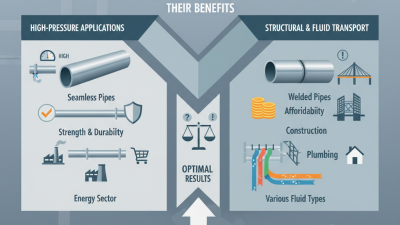
Pipe makers commonly specialize by process and product. Seamless pipes are formed from solid billets, while welded pipes are made from rolled steel strip or plate. Mills may further focus on energy, construction, machinery, or fluid transport needs.
Their equipment, inspection capacity, and quality systems shape what they can reliably produce. A long product list does not prove consistent performance. Buyers should check actual specifications, test records, and production scope. Details matter.
Tips:
Ask whether the mill controls each process or outsources it. Confirm wall thickness, outside diameter, steel grade, and inspection requirements in writing. A factory visit can reveal practical details, such as how pipes are marked and stored. Some records may be incomplete; treat that as a point to investigate, not an automatic verdict.
The industry also includes processors, trading companies, logistics providers, and testing services. These businesses connect mills with domestic and overseas customers. For buyers, knowing each party’s role can clarify who handles production, inspection, and delivery. The supply chain can be efficient, but it is not always transparent. Verify responsibilities before placing an order.
Key Criteria for Evaluating Chinese Steel Pipe Manufacturers
When comparing steel pipe manufacturers in China, look beyond production capacity. A large mill may still be a poor fit for a small, tightly specified order. Check whether its product range matches your required grade, outside diameter, wall thickness, and end finish. Ask for sample inspection records and traceable material certificates, not just a general quality statement.
Consistency matters. Review how the manufacturer controls heat treatment, dimensional checks, and non-destructive testing. For a practical check, compare measured wall thickness at several points around a pipe, since unevenness can affect fabrication and service life. Confirm which standards apply to your project, and make sure the supplier can identify the test method and acceptance limits. Details matter.
Delivery and communication also deserve scrutiny. Request a realistic production schedule, packaging details, and a clear process for handling rejected items. A responsive sales contact is useful, but technical questions should reach staff who understand the drawings and inspection requirements. Factory visits or third-party inspections can add confidence, though they cannot guarantee every shipment will be flawless. No shortcut works. I would also compare quotations line by line; a lower price may reflect different testing, tolerances, or packaging. That difference is easy to miss.
Major Steel Pipe Manufacturers and Their Product Strengths
China’s steel pipe manufacturers tend to compete through scale, process control, and the ability to serve different applications. The World Steel Association reported that China produced 1,019.1 million tonnes of crude steel in 2023. That enormous base supports broad access to hot-rolled coil, billets, and other feedstock. But crude-steel volume alone does not prove pipe quality. Buyers should check wall-thickness tolerance, weld inspection records, and batch-level traceability.
Product strengths vary by manufacturing route. Seamless pipe is often selected for high-pressure service, where uniform walls and reliable heat treatment matter. Welded pipe can offer larger diameters and efficient production for water, structural, and energy projects. Some mills focus on corrosion-resistant coatings; others invest in heavy-wall pipe or precision sizing. Look closely. A polished catalogue can hide gaps in inspection capacity.
The International Energy Agency’s Global Hydrogen Review 2024 describes growing infrastructure needs for low-emissions hydrogen, while noting that transport requirements depend on project conditions. This makes material selection more complex, not automatic. Request documented test results for chemistry, tensile strength, impact performance, and weld integrity. Ask how defects are handled. A supplier may have excellent equipment, yet inconsistent process records remain a real concern. Pipe strength is built on the production line, but trust comes from verifiable evidence.
How to Select the Right Chinese Steel Pipe Supplier
What Are the Top Steel Pipe Manufacturers in China?
How to Select the Right Chinese Steel Pipe Supplier
China’s scale makes supplier selection less about finding the biggest factory and more about verifying the right capabilities. The World Steel Association reported that China produced about 1.005 billion tonnes of crude steel in 2024, roughly 53% of global output. That figure shows industrial capacity, not pipe quality. Ask whether the supplier actually controls pipe forming, heat treatment, testing, and traceability, or relies on subcontractors. Small detail, big difference.
Start with the pipe’s service conditions: fluid, pressure, temperature, corrosion exposure, and installation environment. Then match the specification, grade, dimensions, and end finish to a recognized standard such as ASTM or an applicable ISO standard. Request recent mill test certificates, sample inspection records, and evidence that heat numbers remain traceable from billet to finished pipe. Verify production capacity against your order size and schedule. A polished brochure proves little. Independent inspection can help, especially for first orders, but define acceptance criteria before production begins.
Compare suppliers using the same checklist: dimensional tolerances, non-destructive testing, packaging, delivery terms, and response time for technical questions. Ask for references from projects with similar pipe sizes and operating conditions. Review certificates with the issuing body where possible. A low quotation may exclude testing, coating, or export packaging; clarify every line item in writing. I would not rely on price alone. It is tempting, and sometimes wrong.