Leave Your Message
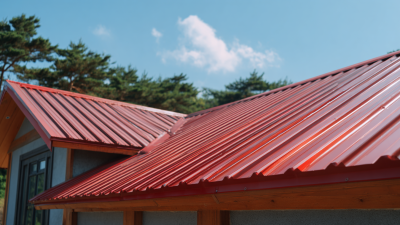
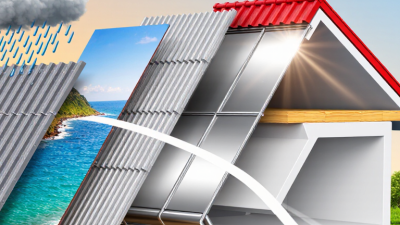
Choosing a Roofing Sheet in 2026 means balancing more than appearance. Climate, roof pitch, building use, installation quality, and maintenance all affect performance. A bright metal panel may suit a hot, exposed roof, while a coated steel sheet can offer a practical balance of strength and cost. In coastal areas, corrosion resistance deserves special attention. Details matter.
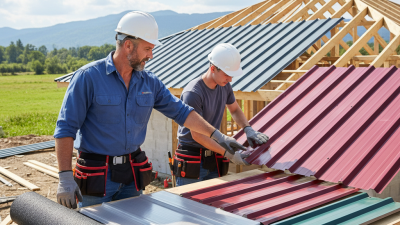
Metal, galvanized steel, aluminium, polycarbonate, and fibre-cement sheets each serve different needs. Their weight, lifespan, insulation properties, and upkeep vary. Todd Miller, a metal-roofing specialist, offers a useful principle that can be summarized this way: choose a roofing system for the building, not just for its initial price. This is a paraphrase, not a verified direct quotation. It captures a key point: the sheet, fasteners, underlayment, and installation must work together.
The sections ahead compare leading roofing sheet types expected to remain popular in 2026. They consider durability, appearance, cost factors, and suitable applications, from small garden structures to commercial roofs. They also look at drawbacks, because no material is perfect. A lightweight sheet may dent; a durable option may need a larger upfront budget. Product specifications and local weather still matter. This guide offers a starting point, not a substitute for checking manufacturer data or getting advice from a qualified roofing professional.
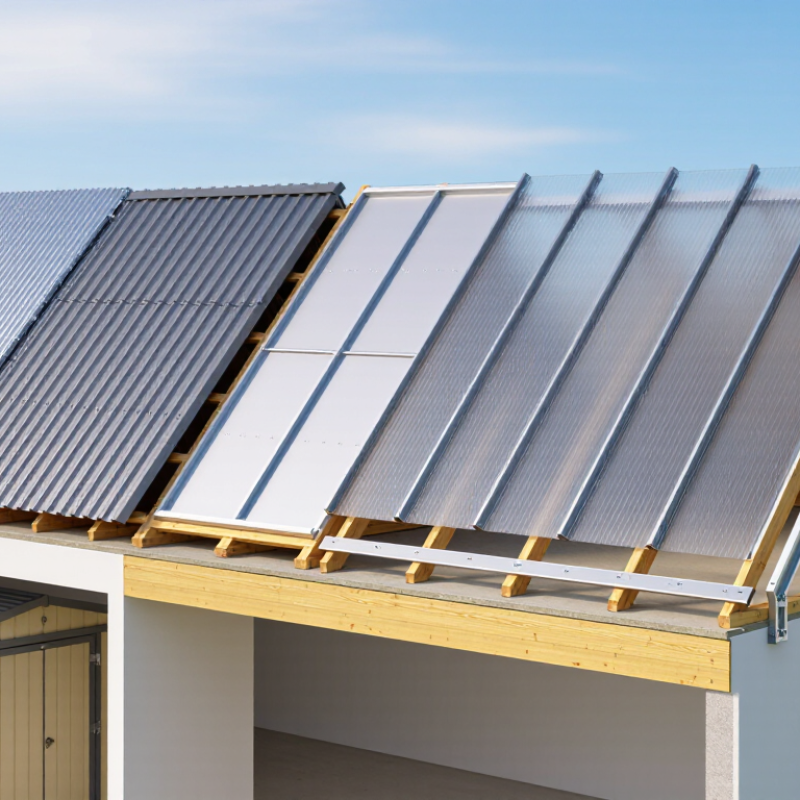
Roofing sheets are factory-formed panels or overlapping units that shed water from a roof. They are commonly classified by material, profile, and installation method. Material groups include steel, aluminium, zinc, fibre-cement, and bitumen-based sheets. Profiles range from corrugated waves to trapezoidal ribs and flat standing seams. Each shape affects stiffness, drainage, and how the sheet connects to the roof frame.
Performance is another useful classification. Check coating, thickness, fire rating, wind resistance, and whether fasteners remain exposed. ASTM International publishes test standards for roof coverings, including ASTM E108 for fire testing; these results help compare products, but do not replace local design checks. The U.S. Department of Energy’s Energy Saver guidance reports that cool roofs can be more than 50°F cooler than conventional roofs in sunny conditions. That is a surface-temperature comparison, not a guarantee of lower energy bills.
Tips: Match the sheet to roof slope, rainfall, wind exposure, and supporting structure. Ask for test documentation, not just a product label. A ribbed panel may drain well, yet its exposed fasteners need careful inspection over time. Classification helps, but it can oversimplify real roofs. Installation details matter.
| Roofing Sheet Type | Main Material | How It Is Classified | Typical Characteristics | Common Applications | Key Considerations |
|---|---|---|---|---|---|
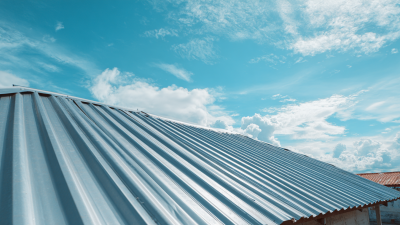
| Corrugated metal sheets | Usually galvanized or coated steel; also available in aluminum | Profile: repeating waves or corrugations | Lightweight relative to many traditional roofing materials; the formed profile adds stiffness. | Sheds, agricultural buildings, workshops, and some residential roofs | Requires suitable fasteners, weatherproof laps, and compatible coatings. Rain noise and condensation should be considered in the roof assembly. |
| Trapezoidal or box-profile sheets | Most commonly coated steel or aluminum | Profile: broad, angular ribs with flatter pans | Ribbed profile provides structural stiffness and is commonly supplied in long lengths. | Commercial, industrial, agricultural, and utility buildings | Required sheet thickness, support spacing, fastening pattern, and wind-load resistance depend on the product and project design. |
| Standing-seam metal panels | Steel, aluminum, zinc, or copper | Roofing system/profile: raised seams join adjacent panels | Panels are joined at raised seams; many systems conceal fasteners beneath the seam or use clips. | Residential, commercial, and architectural roofs | Installation details, seam design, slope requirements, and allowance for thermal movement vary by system. |
| Aluminum roofing sheets | Aluminum, often finished or coated | Material classification; can be corrugated, ribbed, or standing seam | Corrosion-resistant in many environments and lighter than steel of comparable dimensions. | Coastal areas, lightweight structures, and residential or commercial roofs | Aluminum can dent more readily than some steel products. Contact with dissimilar metals and the chosen finish should be considered. |
| Zinc roofing sheets or panels | Architectural zinc alloy | Material classification; commonly formed as flat-lock or standing-seam panels | Can develop a protective patina when correctly specified and installed. | Architectural and residential projects | Needs compatible underlay, detailing, and drainage design. Avoid unsuitable contact with incompatible materials and runoff sources. |
| Copper roofing sheets | Copper | Material classification; formed into sheets, panels, or seam systems | Durable metal that naturally changes appearance as it weathers. | Architectural roofs, dormers, valleys, and other roof details | Higher material cost is common. Runoff and contact with other metals must be managed to avoid compatibility and staining issues. |
| Bituminous corrugated sheets | Bitumen-impregnated organic or cellulose reinforcement | Material and profile: flexible sheets with corrugated form | Relatively lightweight and easy to cut; product performance depends on its specification and installation. | Garden buildings, sheds, and some agricultural or utility structures | Check permitted uses, support spacing, slope, fire classification, and exposure limits in the product documentation. |
| Fiber-cement sheets | Cement reinforced with fibers; modern products commonly use non-asbestos fibers | Material classification; often supplied as corrugated sheets | Rigid, non-metallic sheets with different handling and support requirements from metal roofing. | Agricultural, utility, and some residential buildings | Confirm that the product is asbestos-free and follow manufacturer instructions for cutting, dust control, fixing, and structural support. |
| Polycarbonate roofing sheets | Polycarbonate plastic | Material classification; available as solid, corrugated, or multiwall sheets | Transmits daylight; solid and multiwall formats differ in insulation, appearance, and structural behavior. | Canopies, greenhouses, covered walkways, and roof-light sections | Choose a product suited to UV exposure, temperature changes, fire requirements, and the intended support spacing. |
Classification note: “sheet” describes a panel format, while material and profile are separate ways to classify a roof covering. Suitability depends on the building design, roof pitch, local code, climate, and the manufacturer’s installation guidance.